













4D Gaming home Cinema

Speakers:
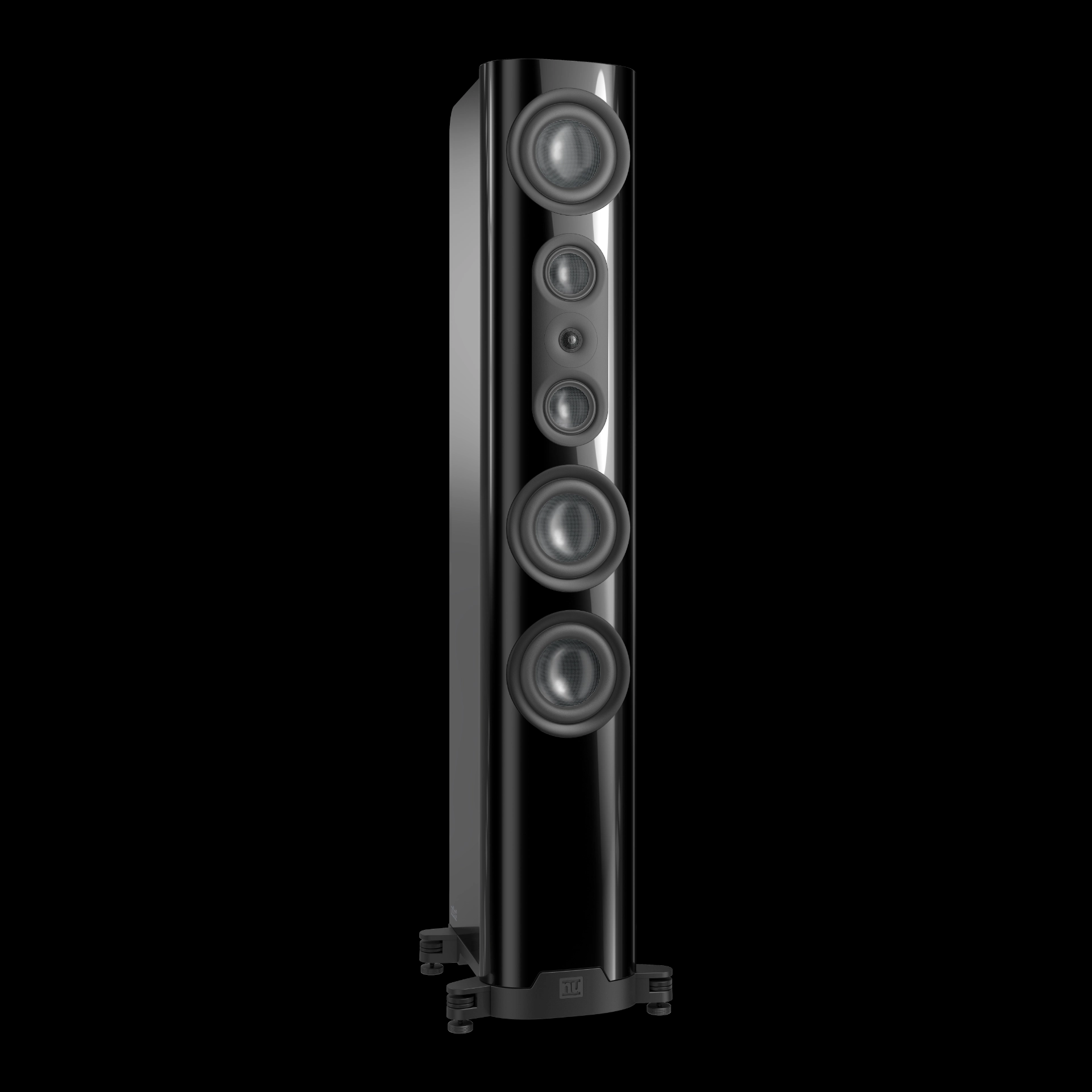
2x nuVero 14: Front
2x nuVero 11: Surround
1x nuVero 7: Center
2x Teufel M500 FCR THX Select: Height Front
2x Teufel M500 FCR THX Select: Height Surround
Electronics:
Nubert ATM Module
Monacor SAM-300D Subwoofer Amplifier
Panasonic TX-P65ST50E 65" 3D Plasma TV
Marantz SR7011 AV Receiver
Cambridge Audio Azur 740A Stereo Integrated Amplifier
Cambridge Audio DAC Magic
Our questions for Home Cinema Weeks:
Thank you for your pictures. Which speakers and electronics do you have installed in your home cinema, and why did you choose this setup?
The goal was to build an acoustically optimal 3D sound system for home cinema, music, and gaming within a limited budget.
I selected the nuVero 14 as the main speakers because they sound particularly neutral, offered excellent value for money, and produce linear sound in the room down to below 20 Hz, eliminating the need for a subwoofer. To maintain tonal and visual consistency with the lower level speakers, I chose the smaller 3-way nuVeros for surround and center. When I initially purchased the Auro/Atmos/DTS-X setup, I still had old Teufel speakers available, so I used them for the 4 height channels, realizing the current 9.0 or 5.0.4 configuration. The setup is complemented by 4 tactile transducers for the "4D effect," providing more perceptible low-frequency effects in movies (3 in the sofa and 1 in the footstool in front).
The Panasonic 3D Plasma TV has not been replaced by a current 4K OLED because I don't want to give up 3D movies.
For gaming, in addition to the 3 oldest Nintendo consoles for retro games, a current gaming PC is available. Due to the enormous water cooling system with 25 fans, 18x 120mm radiators, and Basotect absorbers, the PC, even at full load and a background sound pressure level of 11 dBA, produces no measurable or audible noise at the listening position.
Everything, including lighting, is controlled by the Logitech Harmony Elite, which is paired with an Amazon Echo Dot.
The room acoustics are designed as "deadend-deadend" with a constant rt60 reverberation time of just under 0.2 seconds down to the deep bass. All furniture, speakers, and absorbers are placed symmetrically as much as possible. The listening position is centered at 62% of the room depth, and the front is at 19% of the room depth and 25% from the side wall. The Helmholtz resonators are tuned to the 1st room mode between the side walls. All absorbers, except for the ceiling sail, are covered with colored and acoustically transparent acoustic fabric.
The large DIY bass trap consists of 7 elements, 5 of which are mobile on wheels. This allows the bass trap to be extended from 3500 liters to 7000 liters, including 3500 liters of air. When fully extended, the entire rear wall is completely covered, making the room door disappear both visually and acoustically. The modules are equipped with 58cm x 68cm reflector plates so that only low frequencies are absorbed, and the entire absorption of the room, in combination with the thin first reflection absorbers, occurs evenly across all frequencies. The 3 red modules, located in the center when extended, lack one of the reflection plates at ear level, so they also function as first reflection absorbers.
What fascinates you about home cinema?
1. Better sound than in the cinema
2. Constant availability
3. Low background sound pressure level
Which movie or series should one definitely not miss?
Starship Troopers
Thank you for the interview.
Speakers:
2x nuVero 14: Front
2x nuVero 11: Surround
1x nuVero 7: Center
2x Teufel M500 FCR THX Select: Height Front
2x Teufel M500 FCR THX Select: Height Surround
Electronics:
Nubert ATM Module
Monacor SAM-300D Subwoofer Amplifier
Panasonic TX-P65ST50E 65" 3D Plasma TV
Marantz SR7011 AV Receiver
Cambridge Audio Azur 740A Stereo Integrated Amplifier
Cambridge Audio DAC Magic
Our questions for Home Cinema Weeks:
Thank you for your pictures. Which speakers and electronics do you have installed in your home cinema, and why did you choose this setup?
The goal was to build an acoustically optimal 3D sound system for home cinema, music, and gaming within a limited budget.
I selected the nuVero 14 as the main speakers because they sound particularly neutral, offered excellent value for money, and produce linear sound in the room down to below 20 Hz, eliminating the need for a subwoofer. To maintain tonal and visual consistency with the lower level speakers, I chose the smaller 3-way nuVeros for surround and center. When I initially purchased the Auro/Atmos/DTS-X setup, I still had old Teufel speakers available, so I used them for the 4 height channels, realizing the current 9.0 or 5.0.4 configuration. The setup is complemented by 4 tactile transducers for the "4D effect," providing more perceptible low-frequency effects in movies (3 in the sofa and 1 in the footstool in front).
The Panasonic 3D Plasma TV has not been replaced by a current 4K OLED because I don't want to give up 3D movies.
For gaming, in addition to the 3 oldest Nintendo consoles for retro games, a current gaming PC is available. Due to the enormous water cooling system with 25 fans, 18x 120mm radiators, and Basotect absorbers, the PC, even at full load and a background sound pressure level of 11 dBA, produces no measurable or audible noise at the listening position.
Everything, including lighting, is controlled by the Logitech Harmony Elite, which is paired with an Amazon Echo Dot.
The room acoustics are designed as "deadend-deadend" with a constant rt60 reverberation time of just under 0.2 seconds down to the deep bass. All furniture, speakers, and absorbers are placed symmetrically as much as possible. The listening position is centered at 62% of the room depth, and the front is at 19% of the room depth and 25% from the side wall. The Helmholtz resonators are tuned to the 1st room mode between the side walls. All absorbers, except for the ceiling sail, are covered with colored and acoustically transparent acoustic fabric.
The large DIY bass trap consists of 7 elements, 5 of which are mobile on wheels. This allows the bass trap to be extended from 3500 liters to 7000 liters, including 3500 liters of air. When fully extended, the entire rear wall is completely covered, making the room door disappear both visually and acoustically. The modules are equipped with 58cm x 68cm reflector plates so that only low frequencies are absorbed, and the entire absorption of the room, in combination with the thin first reflection absorbers, occurs evenly across all frequencies. The 3 red modules, located in the center when extended, lack one of the reflection plates at ear level, so they also function as first reflection absorbers.
What fascinates you about home cinema?
1. Better sound than in the cinema
2. Constant availability
3. Low background sound pressure level
Which movie or series should one definitely not miss?
Starship Troopers
Thank you for the interview.